Stand Mixer vs. Hand Mixer
2 min read · Last updated 2026-10-30
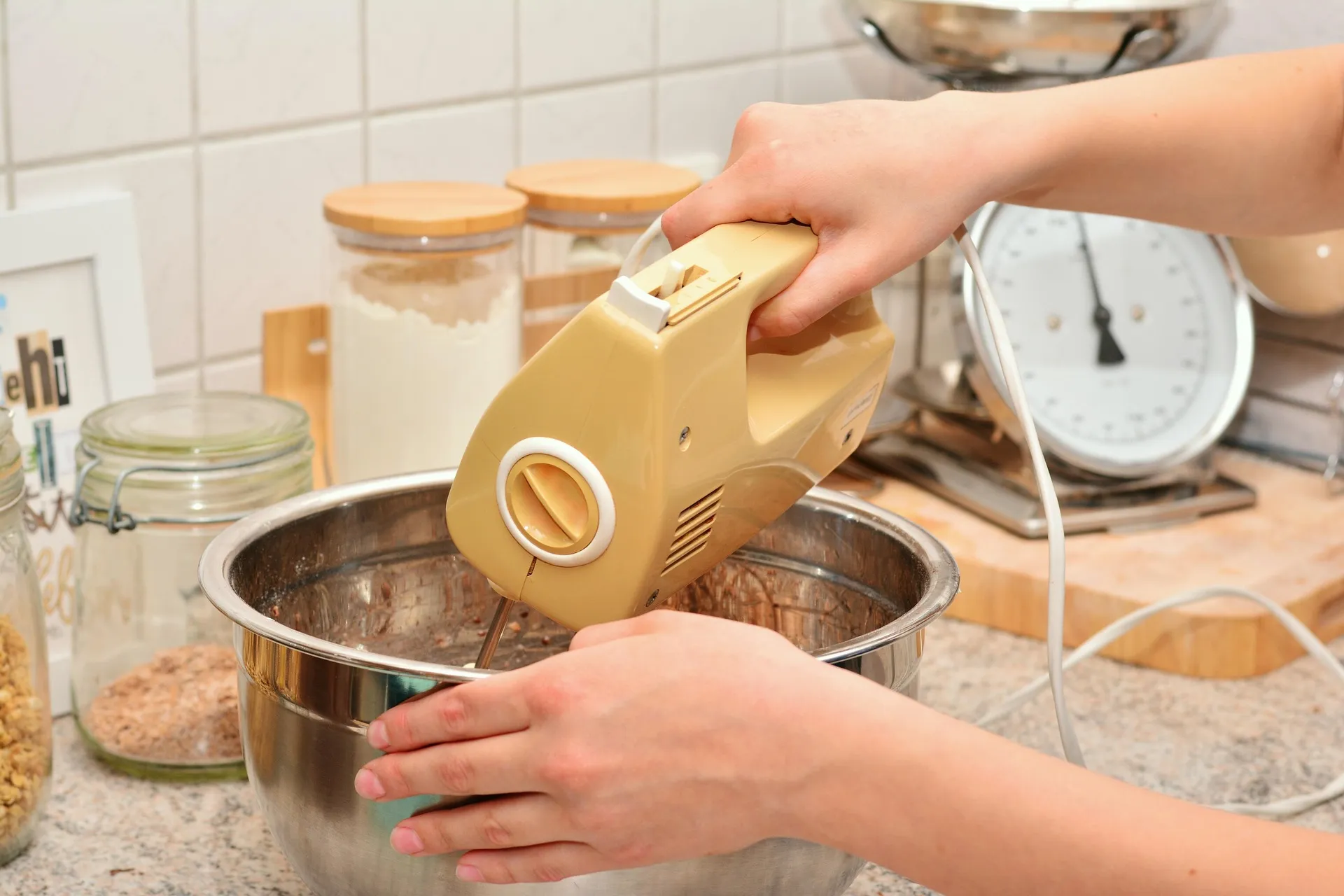
Both kinds of mixer beat, whip, and combine ingredients. The difference is in how much you mix, what you mix, and how much room you want to give up.
Stand mixers
A stand mixer holds a bowl on a base and mixes with attachments while you do other things.
- Bowl capacity: larger bowls handle bigger batches and double recipes.
- Tilt-head or bowl-lift: tilt-head models are easier to add ingredients to. Bowl-lift designs are often used for larger bowls and heavier mixing.
- Attachments: most include a paddle for batters, a whisk for whipping, and a dough hook for bread. Some models offer extra attachments for tasks such as grinding or pasta, sold separately.
- Stability: a heavy base helps keep the mixer from moving during heavy mixing.
- Counter space: stand mixers are large, so think about where you will keep one.
Hand mixers
A hand mixer is a small, lightweight tool that you hold over any bowl.
- It stores in a drawer and takes little space.
- It works well for whipping cream, beating eggs, and mixing cake or cookie batter.
- You hold it the whole time, which can be tiring during long jobs.
- Stiff doughs can be too much for some hand mixers, so check what the manufacturer says the mixer is designed for.
Features worth checking
- Number of speeds and whether there is a slow start to reduce splatter.
- Beater and whisk types included.
- Cord length and where the cord attaches.
- Whether attachments and bowls are dishwasher safe, according to the manufacturer.
Which one fits you?
- If you bake bread or large batches often, a stand mixer can save time and effort.
- If you bake occasionally or have limited space, a hand mixer is often enough.
Specifications and included attachments change between models, so confirm details with the retailer before you buy.